
Episode 4:
Learnings and recommendations:
designing mobility
THAT WORKS OVER TIME


WHEN LEARNING IS ALIGNED WITH REAL OPPORTUNITY, MOBILITY IS POSSIBLE.
Programs like Good Jobs Hawaiʻi demonstrate that when training connects to actual labor market demand, accessible entry points, and higher-wage roles workers experience meaningful and measurable gains.
But this analysis takes that insight one step further. It shows that even without perfect Labor Market Information (LMI) data, we can begin to see where those conditions already exist—and where they do not. Across Hawaiʻi, with the data generated in this episode we can now identify:
Workers who are already within reach of a living wage;
Sectors where opportunity is emerging or aligned; and
Where mobility pathways are incomplete or breaking down.
This is not a complete picture. But it is a starting point—strong enough to move from theory to action.

core learnings
1. Mobility is created through alignment—not training alone.
Workforce systems often focus on expanding training, but training only leads to mobility when it connects to industries where there:
Are jobs people can access
Are wages that sustain workers
Is demand that is growing
Across counties, very few industries meet all three conditions at once. Most sectors provide either access, or wages, or growth—but not all three. As a result, opportunities for economic mobility exists, but only in specific parts of the labor market.
2. Opportunity exists—but it doesn’t consistently translate into economic mobility.
Across Hawaiʻi, there are real examples of pathways that work. In sectors like healthcare and construction, workers can:
Enter without a four-year degree
Earn a living wage
Continue advancing over time
These are not theoretical pathways—they are already producing results. But for most workers, the experience looks different. Someone can:
Find a job quickly—but it doesn’t pay enough to get ahead
See higher-wage roles—but not have a clear way to qualify for them
Complete training—but struggle to connect it to a better job
At the same time, employers are trying to fill roles and training providers are preparing workers, but these efforts are not always aligned in a way that creates clear, consistent movement. The result is a system where:
Opportunity exists
Effort exists
But progress is not predictable
For most workers, getting ahead is possible—but not clearly mapped, and not consistently supported.
3. Small, consistent gains can produce statewide impact.
The investment projections in this episode show what becomes possible when progress is sustained over time. Even modest, consistent investments—supporting a small share of workers each year to transition into higher-wage roles—compound into:
Billions in additional earnings for residents
Billions in economic activity across local economies
Measurable shifts in economic mobility statewide
This is not driven by large, one-time interventions. It is the result of steady, year-over-year progress—helping more workers move into roles that pay enough to stay and thrive in Hawaiʻi.
Expanding economic mobility increases earnings, strengthens local economies, and creates new opportunity over time—but realizing that potential requires intentional design, better data, and sustained investment across generations.
4. Economic mobility must be built through place-based, industry-specific strategies.
Economic mobility happens within local labor markets—shaped by industry mix, employer demand, training capacity, and access to opportunity. This means progress depends on leadership at the county level. Across Hawaiʻi, the opportunity is not to apply a single statewide solution—but to support place-based strategies that are grounded in local industry conditions and designed in partnership with employers. This looks like:
Employers identifying where roles can become more accessible and where advancement pathways can be strengthened
Community colleges and training providers aligning programs with specific industries and building direct connections to jobs
County and regional leaders using data to track progress, strengthen feedback loops, and align workforce and economic development priorities
State partners aligning policy, data systems, and funding streams to support local pathway development—while strengthening data infrastructure to track economic mobility over time
Funders investing in the connective tissue that makes pathways work—intermediaries, employer engagement, and coordination—and committing to sustained, place-based investment so progress can compound over time
These strategies should not be one-time efforts. They require ongoing planning and iteration—with clear near-term actions, medium-term alignment, and long-term goals tied to economic mobility outcomes.
Economic mobility will not be solved by a single system—it will be built through coordinated action within each county, aligned to the industries that shape local opportunity.
What makes this possible RIGHT NOW
Even with current data limitations, this analysis provides a foundation for action. At the county level, it enables:

Community colleges to align programs with real pathways

Employers to better understand where talent pipelines can grow

Funders to target investments where mobility is most achievable

Public partners to identify where policy can expand access
What needs to be built next
1. Design economic mobility pathways—not isolated training efforts.
Training, on its own, does not create economic mobility. It only works when it is clearly connected to a pathway—one that defines:
How workers enter
Which roles they are preparing for
What wages those roles lead to
How advancement happens over time
In many cases today, these connections are unclear or inconsistent. Workers can complete training without a clear line of sight into a higher-wage role, and employers can struggle to connect available talent to their needs.
The goal is not to expand disconnected training—it is to build economic mobility pathways that are visible, navigable, and aligned with real opportunity.
2. Balance industry-specific pathways with transferable skill development.
At the same time, not all mobility pathways can—or should—be narrowly tied to a single industry. As county economies evolve, and as technologies like AI reshape the nature of work, workers will need skills that transfer across roles and sectors. This creates a dual opportunity:
Industry-aligned pathways in sectors where demand, wages, and access are already clear (e.g., healthcare, construction)
Transferable skill pathways that build capabilities—such as digital fluency, problem-solving, communication, and applied technical skills—that allow workers to move across industries as opportunities change
These approaches are complementary. A resilient workforce system prepares workers not just for their next job—but for a changing labor market over time.
3. Act now with available data—while building better systems.
This analysis shows that Hawaiʻi does not need to wait for perfect data to begin. Even with current limitations, we can:
Identify workers who are within reach of a living wage
See where economic mobility pathways are beginning to form
Start aligning training, hiring, and investment with real opportunity
This creates an immediate opportunity for counties, community colleges, employers, and funders to begin designing and testing mobility pathways now.
The path forward is not to wait for better data; it is to act with what we have, while improving it over time.
4. Modernize wage and workforce data to measure real economic mobility.
At the same time, this analysis makes clear that Hawaiʻi’s current data systems are not sufficient to fully understand economic mobility. Today, we cannot consistently answer basic questions:
Are workers entering the occupations they trained for?
Are wage gains coming from better jobs—or more hours worked?
Which pathways lead to sustained, living-wage outcomes over time?
One of the most important near-term opportunities is to modernize wage record data through state policy.
Several states have already taken this step:
South Carolina now requires reporting of occupation (SOC), hours worked, and wages (HB 3726)
Virginia requires job title, pay rate, and work location, and links this data to a longitudinal data system (HB 1600)
Washington requires occupational data in wage records to support labor market analysis and training alignment (HB 2308)
These policies enable a much clearer view of how workers move through the labor market over time. For Hawaiʻi, adopting similar legislation would allow us to:
Track whether training leads to intended occupations
Distinguish between full-time employment and multiple job holding
Understand how economic mobility actually occurs across sectors and counties
This is exactly the limitation identified in UHERO’s research. Without this level of visibility, we cannot distinguish between short-term movement and true economic mobility.
5. Set economic mobility as the goal—and build the ability to measure it.
Today, Hawaiʻi’s workforce system is not consistently designed or evaluated around economic mobility. We can see where jobs exist; where wages are higher; and where industries are growing. But we do not consistently measure whether:
People move into jobs aligned with their training
People achieve sustained wage growth
Pathways lead to long-term economic mobility
This is both a data gap—and a strategic gap. State agencies and partners have an opportunity to more explicitly define economic mobility as a core outcome of workforce and economic development efforts, and to align measurement, policy, and investment accordingly.
Recent efforts like the passing of SCR 139 in the 2026 Legislative session signal growing momentum in this direction in Hawaiʻi. Building on that foundation, Hawaiʻi can:
Establish shared definitions and goals for economic mobility
Track outcomes across programs, industries, and regions
Identify which pathways lead to sustained progress
Continuously improve strategy based on real results
Without clear goals and the ability to measure them, we risk designing systems around activity rather than outcomes. With both in place, we can intentionally design—and scale—pathways that lead to lasting economic mobility.
the opportunity ahead

Hawaiʻi’s Generational Workforce Commitment sets a clear goal:
Every resident should have a path to a good job that enables them to learn, work, and thrive in Hawaiʻi.
This analysis shows that reaching that goal does not require starting from scratch. The building blocks already exist across the state. What’s needed now is to:

Identify workers who are already within reach

Understand the industries they are connected to today

Intentionally build pathways from where they are to where opportunity exists
This is a starting point—not the full solution. By focusing first on workers who are closest to a living wage, we can begin to understand how mobility actually happens in practice—what pathways work, where they break down, and what it takes to move people into better opportunities.
Over time, those insights can be used to expand and strengthen pathways so they reach more workers, across more industries, and at earlier stages of their careers.
For the first time, we can begin to see both sides of the equation—workers and opportunity—and where the connection breaks down. The question is no longer whether economic mobility is possible.
It is whether we can make it visible, intentional, and scalable over time.
Economic mobility doesn’t happen by chance—it happens by design, through how we deliberately connect education, training, and work.
With the visibility we now have, Hawaiʻi has an opportunity to do that more intentionally.

roots to canopy
Explore Episode 4
Mobility through Lifelong Learning
An introduction to what we know about workforce training from UHERO’s analysis of Good Jobs Hawaiʻi; how we define workforce opportunity; and statewide mobility trends.
Mobility in Hawaiʻi County
An in-depth analysis of industries; workforce opportunities and challenges; and the potential impact of investment in mobility pathways in Hawaiʻi County.

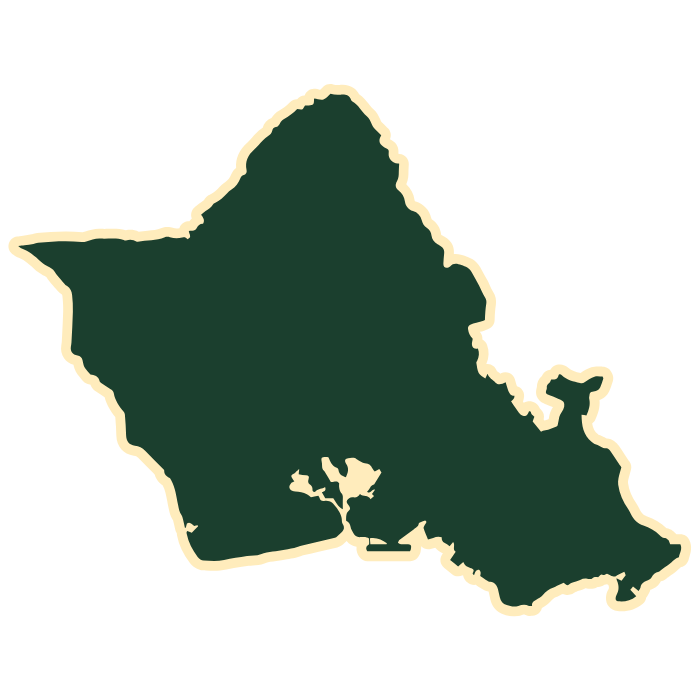
Mobility in Honolulu County
An in-depth analysis of industries; workforce opportunities and challenges; and the potential impact of investment in mobility pathways in Honolulu County.
Mobility in Maui County
An in-depth analysis of industries; workforce opportunities and challenges; and the potential impact of investment in mobility pathways in Maui County.

Mobility in Kauaʻi County
An in-depth analysis of industries; workforce opportunities and challenges; and the potential impact of investment in mobility pathways in Kauaʻi County.