Hawaiʻi Coalition Advances Generational Workforce Commitment To Build Living-Wage Career Pathways
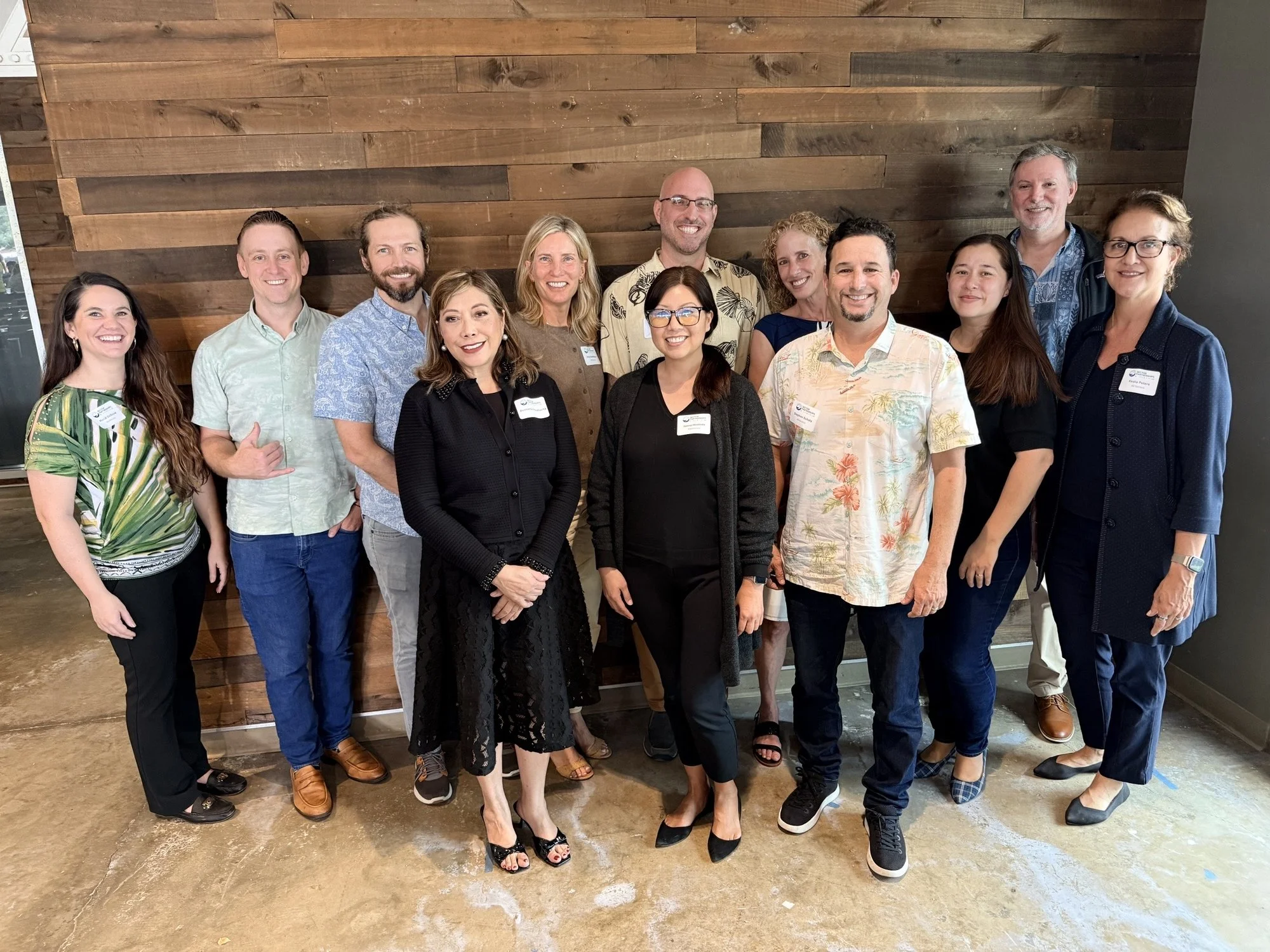
Some members of the Learn, Work, Thrive Hui at the Chamber of Commerce Hawaii’s Feb. 10 All-Sector Partnerships meeting include: Rear Row: (L to R) Mandi DeSouza (Kaiser Permanente), Matt Prellberg (Holomua Collaborative), Matt Stevens (Hawaii Workforce Funders Collaborative), Amy Asselbaye (City and County of Honolulu, Office of Economic Revitalization), Alex Harris (Harold K.L. Castle Foundation), Christine Beaule (University of Hawaiʻi System), Keith DeMello (State of Hawaii Workforce Development Council)
Front Row: (L to R) Bennette Misalucha (State of Hawaii Workforce Development Council), Janna Hoshide (Healthcare Association of Hawaii), Stephen Schatz (Hawaii P20 Partnership for Education), Erica Nakanishi-Stanis (HawaiiKidsCAN), Keala Peters (Chamber of Commerce Hawaii)
Mahalo to our Learn Work Thrive Hui members for being a part of this generational goal, and for being a part of this announcement. Read the news release about Hawaiʻi’s Generational Workforce Commitment below.
Learn Work Thrive Hui Members
AE Consulting | Aloha United Way | C.A. Cross & Associates | Chamber of Commerce Hawaii | City & County of Honolulu Office of Economic Revitalization | ClimbHI | County of Kauai Economic Development | County of Maui Office of Economic Development | Department of Human Services - Division of Vocational Rehabilitation | Harold K.L. Castle Foundation | Hawaii Community Foundation | Hawaii County | Hawaii Department of Education | Hawaii Employers Council | Hawaii Executive Collaborative | HawaiiKidsCAN | Hawaii P20 Partnership for Education | Hawaii Workforce Funders Collaborative | Healthcare Association of Hawaii | Holomua Collaborative | Holomua Collective | HTDC | Kaiser Permanente | Kamehameha Schools | The Kirk-Landry Charitable Fund | Kohala Coast Community Fund | Kosasa Foundation | Maui Economic Development Board | State of Hawai‘i Workforce Development Council | Stupski Foundation | University of Hawaii System
Hawaii leaders across government, business, education, non-profits and philanthropy are advancing a bold statewide goal to ensure residents have living-wage jobs and can continue to live in Hawaii.
This statewide North Star goal, called Hawaii’s Generational Workforce Commitment (the Commitment), pledges that by 2045 all Hawaii residents have a path to a career that allows them to learn, work and thrive in Hawaii and contribute to a vibrant economy grounded in community values. The 20-year Commitment also includes short-term goals that deliver incremental progress.
The setting of a statewide North Star goal that aligns workforce efforts comes at a defining moment for Hawaii:
More of our young people — including those with degrees — are leaving Hawaii as the cost of living outpaces wages. [1]
Over the next decade, projected job openings that pay a living wage fall short of the number of young people entering Hawaii’s labor market by 40%. [2]
Less than 50% of Hawaii’s four-year college graduates will be working in degree-requiring jobs within five years of graduation. [3]
"As a doctor, I've learned that the best outcomes come from treating root causes, not just symptoms,” says Hawaii Governor Josh Green, M.D. “The Generational Workforce Commitment does exactly that for Hawaii’s economy. Building on the State Unified Plan, the Commitment takes a comprehensive, data-driven approach to ensure our keiki can build careers right here at home. This isn't about quick fixes. It's about generational change. When we align our schools, our university system, our employers and our state agencies around a common goal, we create real pathways for Hawaii's families to earn living wages and thrive in our state."
The Legislature is considering two bills, HB1859 and SB2588, that will adopt the Commitment as a shared responsibility among state agencies. HB1859 has garnered support from across the public and private sector, including: DBEDT, Hawaii State Commission on the Status of Women, University of Hawaii, City & County of Honolulu Office of Economic Revitalization, Hawaii Workforce Funders Collaborative, Chamber of Commerce Hawaii, HawaiiKidsCAN, Aloha United Way, Holomua Collaborative, aio and Title Guaranty Hawaii.
“We know Hawaii’s workforce challenges aren’t simple and they can’t be solved alone by any one organization or stakeholder,” said Matt Stevens, Executive Director of the Hawaii Workforce Funders Collaborative. “This Commitment is about choosing to work differently over the long term: staying focused on shared outcomes, making tough decisions, and investing in what actually changes people’s lives. Doing that together will take courage, and it’s how we will ensure that more of Hawaii’s families can build stable lives and thrive here at home.”
Meeting the needs of Hawaii’s next generation through the Commitment includes immediate actions:
For government: it brings state agencies and federal workforce funds together around a shared direction with inter-agency facilitation.
For education: it expands Career & Technical Education, work-based learning, and skills training for students and creates clear pathways so students are prepared for new and emerging in-demand jobs.
For employers: it expands industry leadership through Sector Partnerships, ensuring that employers’ current and emerging needs are what shape students' learning. It also commits employers to provide hands-on, career-connected work-based learning including paid internships and apprenticeships.
For the community: it ensures employment resources across the state are coordinated and easy to access, regardless of geography or socio-economic status.
The Commitment is advanced through the Learn Work Thrive Hui, a community-driven coalition facilitated by the Hawaii Workforce Funders Collaborative and the Chamber of Commerce Hawaii.
While the Commitment focuses on aligning education and workforce systems, leaders emphasized that workforce alignment is a necessary foundation for broader economic stability. Without sufficient access to living-wage jobs and career mobility, progress in housing and cost-of-living initiatives cannot fully translate into long-term stability — particularly on the neighbor islands, where workforce pressures are most acute.
"This effort is about ensuring every island, and every community has a real stake in Hawaii’s future,” said Hawaii County Mayor Kimo Alameda. “Counties are where workforce challenges are most visible — and where solutions take shape first. We are excited to launch Project Pilina to unite economic and workforce development and look forward to our county-wide workforce summit on May 6th."
Business leaders are taking an active role in the Commitment and recognize that their talent pipelines depend on helping students gain hands-on experience and that the end result will be a stronger, economically resilient economy.
“Employers play a critical role in shaping career pathways that lead to living-wage jobs,” said Sherry Menor, President & CEO of the Chamber of Commerce Hawaii. “The Commitment offers a clear path to build capacity and scale high-quality, paid, career-connected learning opportunities across the state. The Chamber is proud to support this initiative because it aligns perfectly with the strategies in our 2030 Blueprint for Hawaii, including investing in workforce and human capital, strengthening key industry clusters, growing emerging sectors, and building economic resilience.”
Education systems are a critical part of ensuring that these pathways are accessible, seamless, and durable over time. Through the Commitment, alignment between the Hawaii Department of Education (HIDOE) and the University of Hawaii (UH) system is strengthened, building the shared infrastructure needed to efficiently connect learners across the state to existing, unfilled good jobs today, while increasing the system’s ability to adapt as new industries and opportunities emerge over the coming decades.
“Our responsibility to the next generation is twofold: we must provide the rigorous academic preparation all students deserve and need, while creating the conditions that allow them to build a life in the islands,” said Stephen Schatz, Executive Director of Hawaii P-20 Partnerships for Education (Hawaii P-20). “Whether it’s staying home or returning after college, we are committed to making Hawaii a place where our graduates don't just survive, but lead and succeed.”
The Commitment builds on the Workforce Development Council’s State Unified Workforce Plan and works in concert with other state initiatives addressing housing, cost of living, and economic development.
The 2026 roadmap, From Crisis to Coalition: A 2026 Roadmap for Hawaii’s Generational Workforce Commitment, released by the Hawaii Workforce Funders Collaborative, provides a detailed blueprint for implementation. The full report can be accessed here: www.hawaiiwork.org/reports/from-crisis-to-coalition-2026.
Citations
[1] “Residents aged 18-24 comprise only 7.1% of the population but account for 21.2% of out-migrants. Those aged 25-34 represent 12.6% of residents, yet account for 21.4% of departures.” Workforce Implications of Hawaiʻi's Out-migration Trends, December 2025, AE Consulting, p. 5, https://tinyurl.com/AEOutmigration
[2] Over the next ten years, 170,000 Hawaiʻi youth with enter the workforce, while over that same time period, there will only be 101,000 job openings that pay a single adult living wage of $62,000.” From Crisis to Coalition: A 2026 Roadmap for Hawaiʻi's Generational Workforce Commitment, January 2026, Hawaiʻi Workforce Funders Collaborative, https://www.hawaiiwork.org/reports/from-crisis-to-coalition-2026
[3] “Hawaiʻi has the highest underemployment rate of any state in the country, with only 43% of four-year degree earners able to obtain a college-level job within five years of graduation.” Talent Disrupted, Strada Education Foundation, February 2024, https://www.strada.org/reports/talent-disrupted